Space Weather impacts on Earth and beyond
by Iulia Chifu & Suzy Bingham
 NASA
NASA
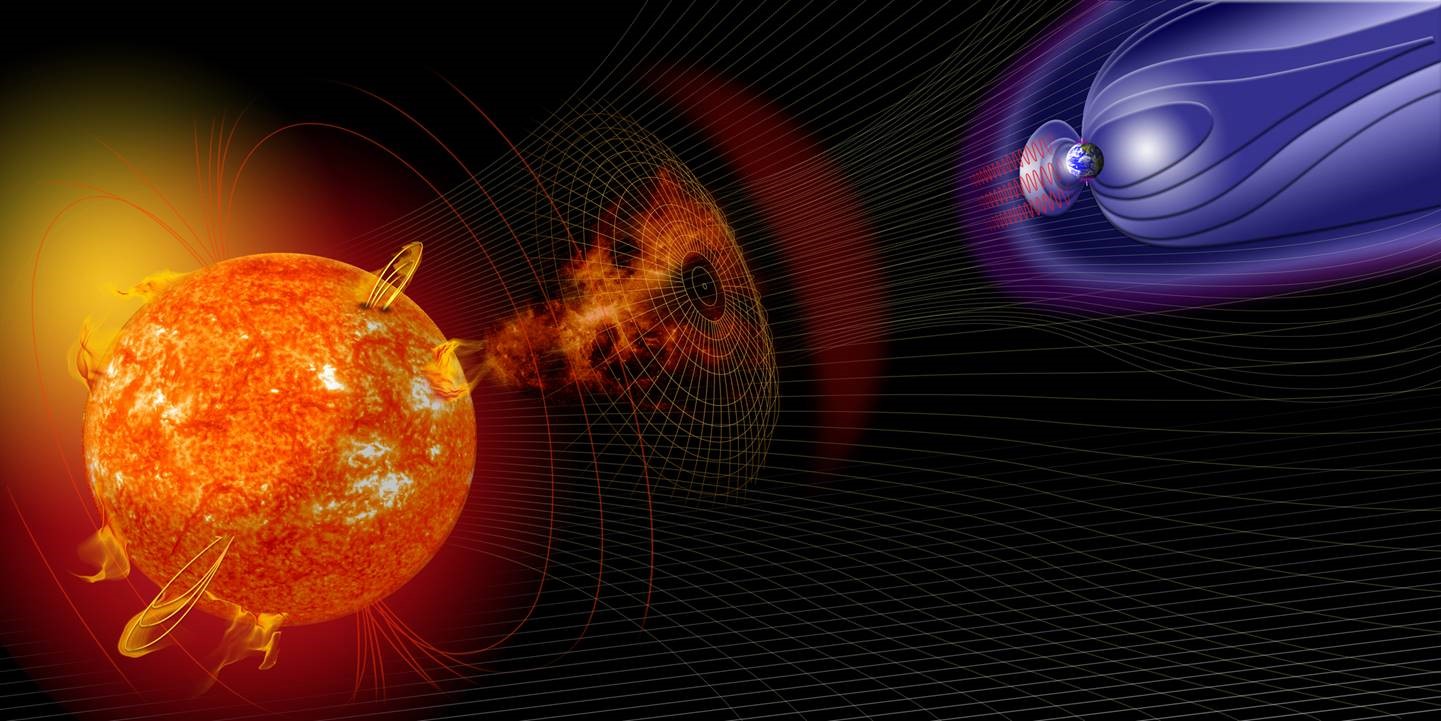
Extreme space weather events are under the spotlight during one of the largest sessions of the ESWW 2025, the SWR2 session convened by Karmen Martinic; Manuela Temmer; Guram Kervalishvili and Rute Santos. The conveners encouraged an interdisciplinary approach to understanding the formation, propagation and impacts of solar storms across the heliospheric system. Their session also explores the “impact of geomagnetically induced currents on engineering infrastructure”.
At the heart of the CD7 session, conveners Gabriella Stenberg Wieser, Sofia Bergman and Charlotte Goetz pose a compelling question to the community: How does space weather affect space objects that lack a magnetic shield? As they highlight, “the interaction of these objects with the solar wind is fundamentally different from that of magnetised bodies such as the Earth.” But what about implications for human and robotic missions beyond Earth?
The conveners of the session CD6, Giovanni Santin, Aiko Nagamatsu, and Thomas Berger, focus on the risks facing human and robotic missions beyond Earth. They underline the importance of understanding, monitoring, and forecasting radiation environments to safeguard both humans and spacecraft systems. 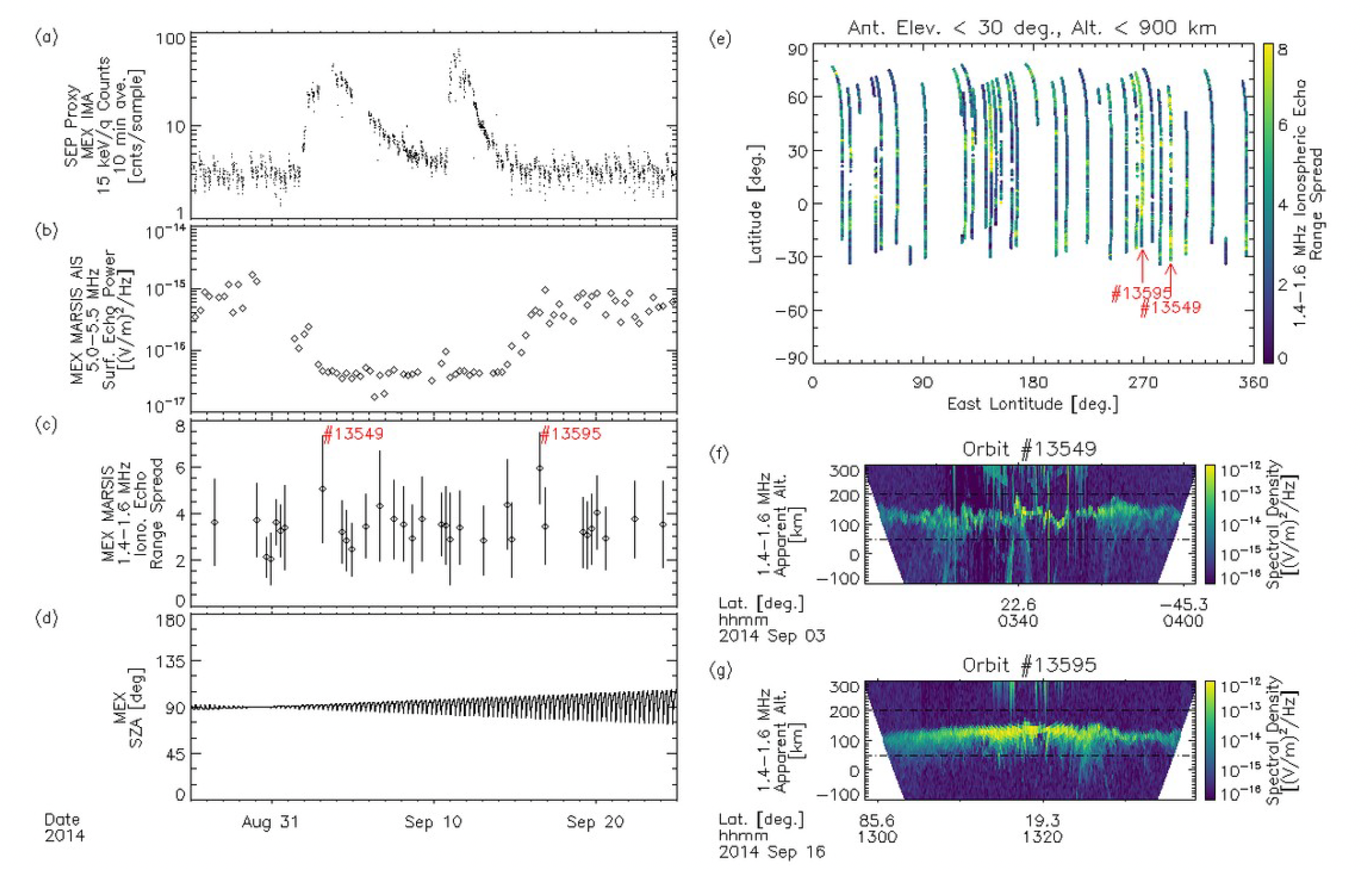 Recorded values of the Martian ionosphere obtained by Mars Express (MEX) during September 2014 events.The conveners of the CD4 sessions spotlight the everyday risks posed by space weather. As they point out, “The increasing reliance on technology-driven transportation systems makes the sector highly vulnerable to space weather impacts. Intense solar storms can disrupt GNSS-based navigation, degrade HF and satellite communications, interfere with avionics, and even induce currents in railway infrastructure, potentially leading to disruption or harm”. The session is a call for interdisciplinary cooperation between academics and industry stakeholders, aiming to deepen understanding and drive joint solutions to mitigate space weather risks across transport networks.
In the scientific highlight of the session, "Space Weather at Unmagnetized or Weakly Magnetised Solar System Objects" (CD7), A. Ippolito (find the contributed highlight text here) will discuss the analysis of intense coronal mass ejection (CME) events in September 2014, conducted using multi-spacecraft data. The CMEs provoked “strong perturbations in the interplanetary magnetic field” and in the energetic particle measurements. To understand the propagation of the solar energetic particles (SEPs), they derived the magnetic connectivity between the corona and different targets (Earth, Mars, Mercury). He will present his work on Friday, 31.10 at 08:42 am.
During the talk, they will present a characterisation of the interaction between CMEs and the inner planets of the Solar System, focusing on some of the main effects on each planetary environment, with particular emphasis on the Martian’s ionosphere.